Application
Liquid ammonium chloride spraying, compound fertilisers, fertigation fertilisers, urea-based high-nitrogen compounds, powdered ammonium chloride and potassium nitrate, thenardite and mirabilite types, and dusting-type high-nitrogen products.
Dry surface treatment of fertilizer granules and the fertilizer types listed below.
Key Benefits
The following functions are described in the published source; they are not measured results for every formulation.
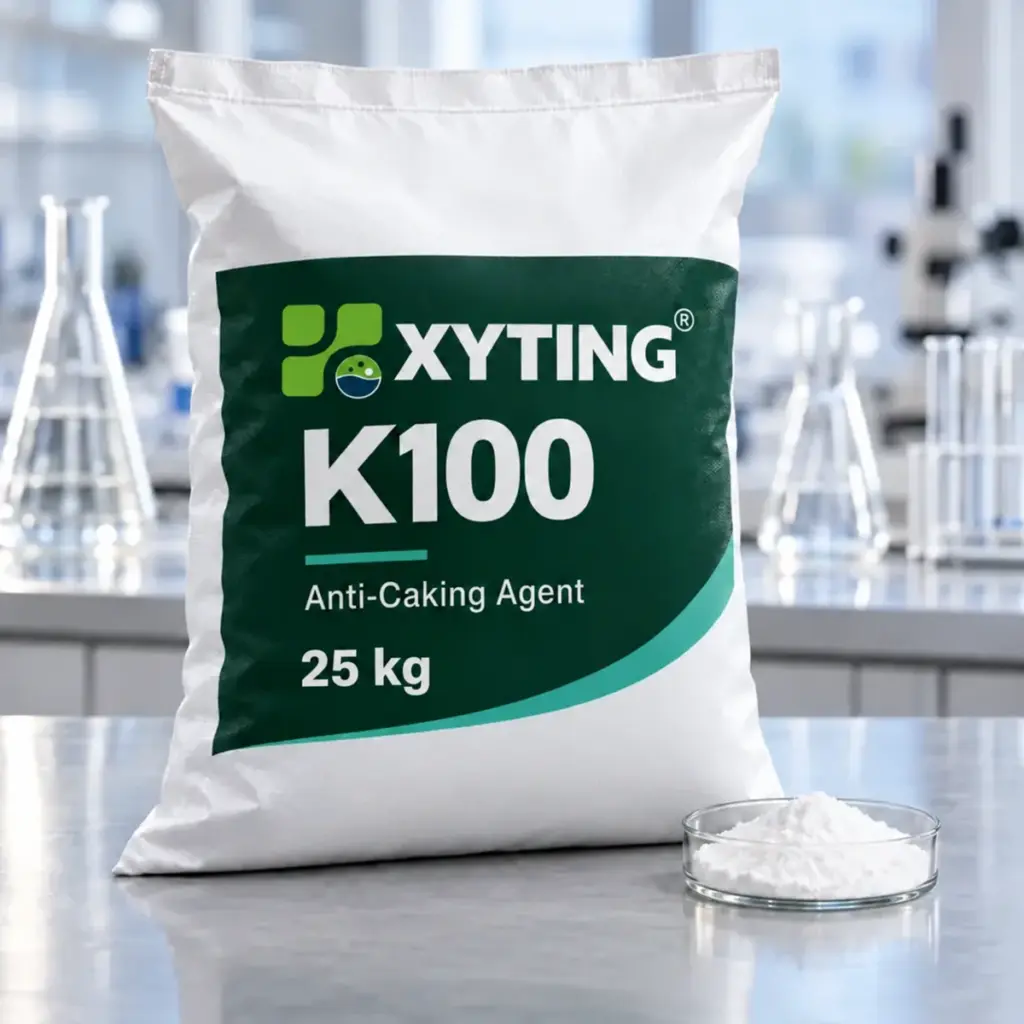
- Dry surface treatment using a coating drum; the source method does not require heating, dissolving or spraying K100.
- The documented function is to reduce granule-to-granule adhesion through surface treatment.
- The public TDS does not provide a controlled comparison or a quantified reduction in caking. Its wider safety, slow-release and soil-benefit statements require separate supporting evidence for the intended use.
Technical Data
See the technical specifications table above and the source TDS below. Keep the stated units, dosage basis and test conditions together when comparing grades.
How to apply it
Using a variable-frequency screw feeder, add K100 about 0.5-1.0 m from the inlet of the coating drum, and let the rotating drum distribute it evenly over the granule surface. The dosage is 3-5 kg per tonne of fertiliser, depending on the fertiliser type.
Storage
Store sealed and dry. The source states a typical storage period of 12 months. Follow the supplied batch label and obtain technical review for material beyond its labelled storage period.
Dosage basis and plant-trial record
The TDS states 3-5 kg of anti-caking agent per tonne of fertilizer. The denominator is fertilizer mass; the document does not separately define an active-material correction. Confirm the supplied-product basis and the approved starting rate before using the range.
- Use one fertilizer batch for untreated and treated samples; record composition, moisture, size distribution and initial temperature.
- Record actual K100 and fertilizer masses, dosing point, drum settings, mixing time and treatment uniformity.
- Keep packaging, fill mass, stacking load, storage temperature, humidity and duration comparable.
- Agree the assessment method and acceptance criteria in advance; record lumps, flowability, dust and break-up behaviour with dated observations and repeat samples.
This is a proposed comparison record, not published K100 trial results. The existing English TDS has no printed revision date; request the current approved revision and a separate SDS. Do not treat the source’s safety or soil-benefit wording as independent proof.
Dry granule caking is distinct from liquid crystallization. See CI-40 and the liquid-fertilizer selection guide for that separate problem; doses and results are not interchangeable.
Download TDS
Download TDS – K100 (English)
The linked file is the existing English technical data sheet. Use its stated model, document version and application scope; confirm any omitted test conditions before use.
The linked document identifies its issuer, brand and model. A catalogue listing does not by itself establish the manufacturer or a brand authorization. Confirm the manufacturer and any applicable authorization for the exact grade when requesting a quotation. A TDS is not a substitute for a separate SDS.
Request Sample
Tell our technical team your fertiliser type, coating drum layout and current caking problem, and we will confirm the dosing point and rate.
Request Sample – K100
Documents are published in their original language and keep the brand and model of the issuing document.