Application
The source lists high-nitrogen, high-phosphorus, high-potassium and balanced liquid fertilizers based on urea, monopotassium phosphate, potassium sulfate or potassium nitrate. These listed ingredients do not establish compatibility with every blend or a verified operating pH range. Environmental and safety statements require separate supporting information.
Liquid water-soluble fertilizers and concentrated macronutrient fertilizer solutions.
Key Benefits
The following functions are described in the published source; they are not measured results for every formulation.
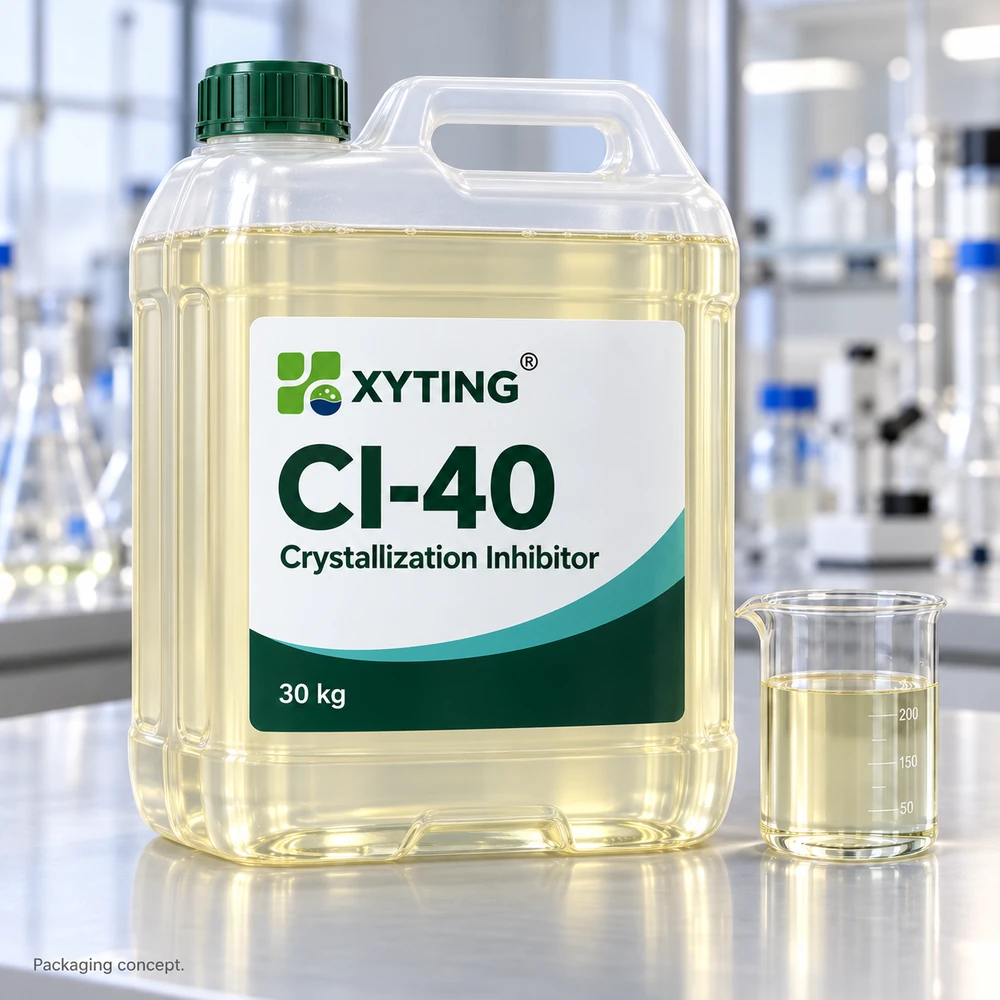
The intended function is to limit crystal formation and growth in the selected nutrient solution. The public TDS does not provide formulation-specific cold-storage results, solubility measurements or a quantified improvement. Validate stability in the complete fertilizer rather than assuming a universal result.
Technical Data
See the technical specifications table above and the source TDS below. Keep the stated units, dosage basis and test conditions together when comparing grades.
Dosage
The source lists 0.5%-2% of the total liquid-fertilizer weight, with addition after cooling and before filling and thorough mixing. Confirm the numerator, starting level and process conditions described below before applying that source range.
Storage
Store unopened at 5-40 °C. Shelf life is 12 months from the date of manufacture.
Dosage basis and cold-storage comparison
The source range of 0.5%-2% uses total liquid-fertilizer weight as the denominator. Whether the numerator is supplied CI-40 or active material requires written confirmation. Do not divide by the approximately 40% active-content figure without confirming the basis.
The source recommends addition after cooling and before filling, but gives no numerical addition temperature or mixer settings. Its viscosity value at 25 degrees C lacks an instrument, geometry and speed; the active-content assay and pH sample preparation also require confirmation.
- Prepare untreated and treated samples from the same fertilizer batch. Record individual salts, concentration, pH, water quality and sample mass.
- Record actual additive mass, agreed dose basis, addition temperature, mixing conditions and container.
- Apply the same defined cooling, storage and rewarming schedule; agree temperatures, duration and repeat samples in advance.
- Record the onset and extent of visible crystals, sediment, appearance and redissolution on warming. Quantify dissolved nutrients only under an agreed analytical method.
This is a proposed comparison framework, not measured CI-40 results. Product storage at 5-40 degrees C is not a validated fertilizer cold-storage test range. The existing English TDS has no printed revision date; confirm the current approved revision and request a separate SDS.
See the liquid-fertilizer selection guide to distinguish crystal formation from suspended-solid settling. For dry granule caking, review K100 separately.
Download TDS
Download TDS – CI-40 (English)
The linked file is the existing English technical data sheet. Use its stated model, document version and application scope; confirm any omitted test conditions before use.
The linked document identifies its issuer, brand and model. A catalogue listing does not by itself establish the manufacturer or a brand authorization. Confirm the manufacturer and any applicable authorization for the exact grade when requesting a quotation. A TDS is not a substitute for a separate SDS.
Request Sample
Send your formula, nutrient concentration and the lowest storage temperature you expect to our technical team to confirm the dose for a cold-storage test.
Request Sample – CI-40
Documents are published in their original language and keep the brand and model of the issuing document.